

UV DTF transfer is redefining how brands decorate fabrics beyond traditional T-shirts, delivering vivid color and lasting durability on a range of items. If you already print on apparel, expanding into bags, hats, and other textiles can open new revenue streams. This method uses UV-curable inks in the Direct-To-Film workflow to print sharp designs on different substrates. With proper surface prep, powder, and heat-press settings, you can achieve high-resolution results on cotton, polyester, canvas, and blends. This guide introduces practical steps so you can apply UV DTF transfer confidently to non-apparel products while preserving color, clarity, and durability.
From a broader perspective, the approach can be described as film-based, UV-curable ink transfer for fabrics, a form of direct-to-film decoration. In practice, practitioners refer to it as a direct-to-film workflow that images on textiles with high color fidelity and quick turnaround. For bags, DTF transfer for bags offers bold artwork and reliable wash durability when paired with proper finishing. On hats and other headwear, DTF transfer on hats enables curved-surface printing with sharp edges and less color bleeding. With the right substrate preparation and curing guidelines, this technology delivers durable, vibrant results across canvas, denim, and blends.
Understanding UV DTF transfer for fabrics and accessories
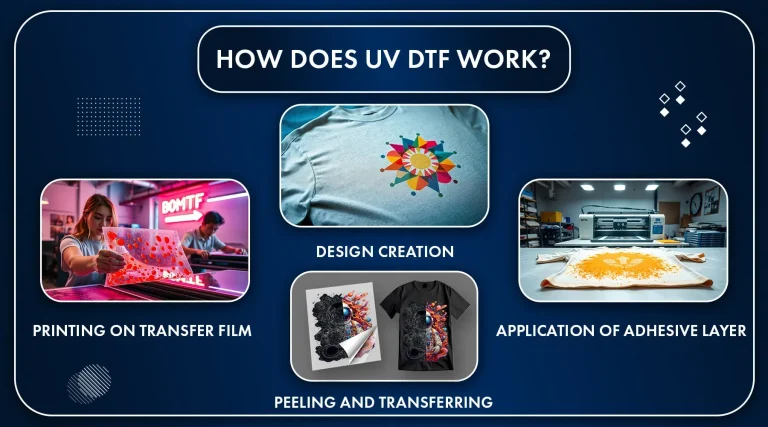
UV DTF transfer blends the speed of UV-curable inks with the flexibility of the Direct-To-Film workflow. Print your design on a UV-curable film, apply a powder, press it onto the chosen fabric, and then cure the image to bond it securely. The UV component lets inks dry instantly on the film, boosting color vibrancy, reducing transfer times, and improving consistency for batch runs.
This approach isn’t limited to garments. With careful surface prep and substrate selection, UV DTF transfer delivers sharp detail and durable adhesion on bags, totes, hats, and other fabrics. The method works across cotton, polyester, canvas, and blends, making it a versatile option for expanding product lines while maintaining quality and wash durability. This contributes to fabric transfers durability across typical wash cycles.
DTF transfer for bags: delivering vibrant prints on tote and backpack materials
Bags come in cotton canvas, polyester, or blends, and UV DTF transfers can reproduce gradients and sharp details on these textures. The result is vibrant, photo-like imagery with smooth color transitions that hold up to texture and wear on totes, messenger bags, and backpacks.
To maximize long-term performance, pre-wash fabrics, apply appropriate adhesives, and ensure even heat and pressure during curing. Following these steps supports edge clarity and overall durability for DTF transfer for bags, helping designs withstand daily use and laundering and contributing to fabric transfers durability.
DTF transfer on hats: mastering curved panels and stitching
Hats present curved surfaces and dense stitching, which can challenge alignment and edge clarity. Use mock-ups, templates, and careful prepress checks to test placement on curved panels and avoid critical elements near seams or stitching lines.
White underbase is often essential for bright, opaque colors on dark hats, and color-separating artwork for contrast helps maintain legibility. Plan for edge bleed and avoid placing important details over seams or bill edges to minimize distortion during pressing and to ensure DTF transfer on hats remains durable.
UV printing on fabrics: substrate compatibility and finishes
Cotton and cotton blends work well for casual bags and apparel-like items, while polyester and performance fabrics benefit from UV DTF transfers that preserve color and detail on synthetic fibers. Canvas offers durability with crisp edges, making it a strong choice for totes and backpacks.
Texture and nap can influence edge clarity, so consider design scaling and underbase choices to ensure legibility on textured substrates. Finishes—matte or gloss—can be selected to complement the fabric’s look and feel, enhancing perceived durability and premium quality in UV printing on fabrics.
From concept to press: a practical UV DTF workflow for bags and hats
Begin with a design brief and color plan, building vector or high-resolution artwork that accounts for substrate color and ink limits. Use mock-ups to confirm placement and ensure critical elements avoid seams, straps, or textured zones.
Print on UV-curable film, verify color accuracy, and ensure the film surface is clean before printing. Then apply adhesive, cure as required, cut and weed the design, align with templates, and heat press at recommended temperatures and dwell times (typical ranges around 160–170°C and 10–15 seconds). Follow the material guidelines for the best results in UV DTF workflows.
Durability, care, and troubleshooting for UV DTF transfers on bags and hats
Durability hinges on proper curing, using quality films and powders, and avoiding excessive ink on textured fabrics. Proper surface prep and curing help designs resist cracking and peeling through daily wear, washing, and abrasion. Provide customers with care tips, such as turning items inside out and avoiding high-heat dryers to preserve the transfer.
Common challenges include cracking around edges, peeling on curved seams, color drift, and inconsistent brightness on dark fabrics. Remedies include adjusting edge bleed, using a white underbase where needed, revising color profiles, and running test patches on similar fabrics before full production. This is where ongoing QC and template-based placement make a measurable difference in fabric transfers durability.
Frequently Asked Questions
What is UV DTF transfer and how does it work for fabrics and bags?
UV DTF transfer uses UV-curable inks printed on a film, followed by adhesive powder and heat pressing to apply the design to fabrics. The UV inks cure instantly on the film, boosting color vibrancy and enabling efficient transfers for bags and other fabrics when you use proper surface prep and curing to ensure durability.
How durable is UV DTF transfer on bags and what factors influence fabric transfers durability?
Durability depends on substrate, ink/powder quality, and proper curing. With high-quality films, correct curing, and suitable topcoats, UV DTF transfers for bags maintain colorfastness and edge integrity, but avoid harsh washing and follow care guidelines to preserve fabric transfers durability.
Can UV DTF transfer be used on hats, and what are best practices for DTF transfer on hats with curved surfaces?
Yes—DTF transfer on hats is feasible. Use curved-surface templates or jigs, place designs away from seams, and consider a white underbase for bright colors on dark hats. Test placement with mock-ups and adjust heat, pressure, and dwell to ensure clean edges on curved fabric.
What substrates work best for UV DTF transfer on bags and how should you prep them?
Common bag substrates include cotton and cotton blends, canvas, and polyester. Pre-wash cotton to reduce shrinkage, perform light surface prep on poly blends, and ensure an even heat application to promote adhesion and long-lasting results in UV DTF transfer.
What are the key steps in a typical UV DTF transfer workflow for bags and hats?
Develop the design, print on UV-curable film, apply adhesive powder and cure, cut and weed, position on the substrate with templates, heat press at the recommended temperature (roughly 160–170°C) for 10–15 seconds, then peel and inspect for full adhesion.
How does UV printing on fabrics compare with screen printing or HTV for fabric transfers durability and color range?
UV printing on fabrics via DTF offers excellent detail and color range, often outperforming HTV on complex designs, with strong durability when properly cured. It also handles textured blends better than traditional methods, though results depend on substrate and process controls.
| Aspect | Key Points |
|---|---|
| What UV DTF transfer is | Uses UV-curable inks in the Direct-To-Film workflow: print on UV film, apply powder, heat-press the design onto fabric, then cure to set. UV inks dry instantly on film, boosting color vibrancy and reducing transfer time for batch runs. |
| Why it works well for bags & hats | Delivers crisp, full-color designs with good wash durability on textured fabrics. Works across substrates such as cotton, polyester, canvas, and blends. Provides a scalable workflow for small to large runs. |
| Substrate compatibility | Common targets include cotton and cotton blends; polyester and blends; canvas; and napped or textured fabrics. Pre-wash and surface prep help adhesion and edge clarity. |
| Design considerations for non-apparel | Adapt designs for curved surfaces and stitching areas. Use a white underbase on dark fabrics when needed. Plan for edges with a small bleed (0.125–0.25 inches). Choose finishes (matte vs gloss) to suit fabric and look. |
| Workflow (concept to press) | 1) Design; 2) Print on UV-curable film; 3) Apply adhesive and cure; 4) Cut and weed; 5) Position on substrate; 6) Heat press or cure (typical 160–170°C / 320–338°F for 10–15 seconds); 7) Peel and finish. |
| Durability & care | Use quality films/powders; ensure proper curing and adhesion; avoid overloading textured fabrics; advise customers on washing (turn inside out, gentle cycle, cold water, low heat drying) to preserve transfers. |
| UV DTF vs other methods | Typically offers superior detail and color range versus HTV; versatile across fabrics (including blends and textured materials); scalable for small runs, though durability depends on proper curing and finishing. |
| Applications & growth | Custom accessories, branded headwear, seasonal collections, and client projects. Great for bags, hats, totes, caps, pouches, and other fabric goods. |
Summary
UV DTF transfer opens up new possibilities beyond traditional apparel, delivering vibrant, durable designs on bags, hats, and other fabrics. This method leverages UV-curable inks in the DTF workflow to achieve crisp detail, excellent color vibrancy, and strong adhesion across a range of substrates. By choosing compatible materials, optimizing the design for non-apparel surfaces, following a solid workflow, and maintaining quality control, you can expand your product catalog with items that stand up to daily wear and washing. With UV DTF transfer, brands and print providers can offer high-detail artwork on tote bags, caps, and other fabric goods, enabling high-value customization and scalable production.