

Direct-to-Film printing has transformed how creators approach custom apparel, delivering vibrant designs with a soft hand, while offering new opportunities for small studios and hobbyists to compete with larger brands, and enabling personalized runs, faster turnarounds, and broader merchandising opportunities across niche markets. At its core, the process uses a transfer film to carry designs onto fabrics and relies on heat pressing for activation, providing repeatable results that hold up under washing, ironing, and daily wear, while remaining adaptable to both single-color accents and full-color artwork. Smart choices in DTF supplies and a reliable DTF printer establish a smooth workflow from design to delivery, reducing downtime and enabling consistent outputs across batches while also supporting expansion into new product lines or service offerings, such as personalization and short-run branding. Understanding DTF ink and powders and how to work with transfer film for DTF helps maximize color, durability, and wash-fastness, while optimizing color management and minimizing waste during production, ensuring reproducible results across different fabric blends and finishing methods. From selecting the right equipment to optimizing substrate compatibility, this guide outlines practical steps for success and offers actionable tips for scaling from one-off projects to mid-volume runs, with emphasis on setup, calibration, ongoing quality control, supplier relationships, and clear documentation for audits.
From another angle, this technology can be described as a film-based textile transfer that moves designs from a coated sheet to fabric using heat and pressure. Alternately called ink-on-film decoration or a digital fabric transfer, it enables vibrant images on a range of substrates. The approach is similar to a vinyl-like transfer, where an adhesive layer and heat activate adhesion to the garment. Marketers and operators refer to it as a print-on-film workflow or direct-to-fabric transfer, emphasizing its flexibility and scalability. Understanding these related terms helps readers recognize the method across suppliers, tools, and compatible substrates.
Direct-to-Film printing: How It Works and Why It Transforms Textile Design
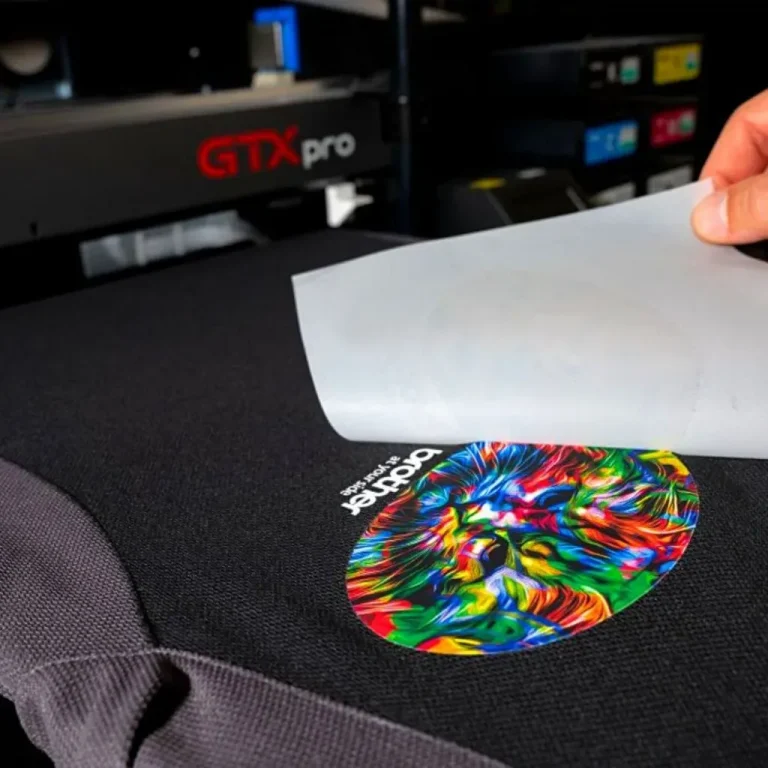
Direct-to-Film printing uses a transparent or translucent transfer film as the carrier for your artwork. The design is printed on the film with DTF inks, then coated with an adhesive powder. After curing, the powder is fixed to the film so the image can be transferred to fabric under heat and pressure. When done correctly, this process delivers vibrant color, soft hand-feel, and strong wash durability across a wide range of fabrics.
Because the artwork is created on a reusable film, businesses and hobbyists can scale up or down without the high tooling costs associated with some other transfer methods. The workflow relies on key DTF supplies—from the transfer film for DTF to the adhesive powders and curing equipment—to produce consistent results. With the right setup, color management and calibration become straightforward, enabling reliable outputs across batches.
Choosing a DTF printer for reliable performance and scalable production
Selecting the right DTF printer involves evaluating resolution, color depth, and print speed. A typical setup targets 600–1200 dpi for crisp edges and accurate color, with careful attention to white ink handling whether via dedicated channels or a double-pass approach. Maintenance accessibility and community or manufacturer support also factor into long-term reliability for both small hobby projects and larger runs.
Another critical consideration is RIP software compatibility and color profile management. The ability to calibrate color across different fabrics, plus straightforward maintenance and service plans, helps you maintain consistent results. A suitable DTF printer pairing with reliable ink delivery and film handling reduces downtime and supports scalable production as demand grows.
Essential DTF supplies: Transfer film for DTF, inks, powders, and more
A complete DTF setup starts with the DTF printer and the right DTF inks and powders. The adhesive powder is applied after printing and then cured to prepare the film for transfer, making these materials foundational to a successful workflow. The transfer film, chosen for consistent coating and clean release, works in tandem with the inks to deliver vibrant images on fabric.
Beyond the core components, you’ll also need a heat press or conveyor dryer, substrates or test swatches for color calibration, cleaning tools, and software for color management. Stocking up on spare parts and having a routine maintenance plan helps keep the DTF supplies working smoothly and minimizes downtime during production.
Delivering color accuracy: Ink, powder, and color management for DTF
Inks form the backbone of Direct-to-Film printing. A typical workflow uses white ink for base coverage on dark fabrics and CMYK inks for the design colors, with adhesive powder enabling the transfer. Effective color management relies on careful calibration and the use of ICC profiles to maintain consistent results across different base fabrics and lighting conditions.
Color management becomes more predictable when you standardize on a reliable RIP workflow and regularly test prints on sample fabrics. By balancing ink choices, powder adhesion, and film compatibility, you can minimize color drift and ensure that designs reproduce faithfully—from light substrates to dark textiles—while preserving edge sharpness and vibrancy.
Building a smooth DTF workflow from design to finished garment
A streamlined DTF workflow reduces misprints and waste while boosting throughput. Start with clear design setup, high-resolution artwork, and transparent backgrounds to simplify placement on garments. Then print on the film, ensuring proper calibration for any white ink layers before proceeding.
Next comes powder application and curing, followed by a precise heat-transfer step. Inspect the result for edge definition and overall texture, and perform any post-press finishing needed to improve wash durability. Maintaining a test swatch library and documenting parameter settings helps sustain consistency across orders and fabrics.
Troubleshooting, safety, and sustainability in DTF operations
Common issues include color mismatch, white ink coverage problems on dark fabrics, powder adhesion failures, edge bleeding, or films sticking to garments. Address these by recalibrating color profiles, verifying RIP settings, and checking powder curing times and temperatures. Regular inspections of film paths and printhead cleanliness also prevent recurring faults.
Safety and sustainability considerations emphasize proper ventilation and protective equipment when handling inks and powders. As the market evolves, look for eco-friendly inks, more durable transfer films, and ongoing material certifications. Staying current with best practices and supplier guidance helps you deliver durable, environmentally responsible products while maintaining consistent production quality.
Frequently Asked Questions
What is Direct-to-Film printing and how does the transfer film for DTF enable vibrant designs?
Direct-to-Film printing is a versatile textile transfer method that prints designs on a transfer film using a DTF printer, then bonds them to fabric with heat and pressure. The transfer film for DTF carries the ink and is coated with an adhesive powder that, when cured, enables a crisp transfer with bright colors, soft hand-feel, and good wash durability.
What DTF supplies do I need to start a Direct-to-Film printing project?
DTF supplies include a DTF printer, DTF inks and powders, transfer film for DTF, adhesive powder, curing equipment, a heat press or conveyor dryer, substrates for testing, cleaning tools, and RIP software for color management to ensure consistent results.
How should I choose a DTF printer?
When choosing a DTF printer, consider resolution and color depth (typically 600–1200 dpi), print speed, how white ink is handled (dedicated white channels or double-pass), ease of maintenance, and compatibility with RIP software for reliable color management.
What should I know about DTF ink and powders and color management?
DTF ink and powders form the core of the process: white ink for light bases and CMYK inks for colors, combined with adhesive powder for transfer. Proper curing, color calibration with RIP profiles, and testing across fabrics are essential to maintain consistent results across orders.
What factors affect the Direct-to-Film workflow from design to finished garment?
A smooth DTF workflow depends on clear design preparation, proper printing on film, even powder application, adequate curing, and precise heat-press transfer. Using a reliable transfer film for DTF and a disciplined color-management plan helps ensure consistent, high-quality results across substrates.
What are common issues with Direct-to-Film printing and how can I troubleshoot them?
Common issues include color mismatch, white ink coverage problems on dark fabrics, powder not adhering, edges bleeding, and film sticking after transfer. Troubleshoot by recalibrating color profiles, checking white base and powder adhesion, verifying curing time/temperature, adjusting heat-press settings, and ensuring film compatibility.
| Topic | Key Points |
|---|---|
| Direct-to-Film printing},{ | |
| Direct-to-Film printing | A versatile textile transfer method using a specialized transfer film, adhesive powder, and a heat press to move designs onto fabrics, delivering vibrant color and durable wash performance. |
| How it works | Design is printed on a transparent transfer film, coated with adhesive powder and cured, then heat-transferred onto fabric to bond ink with the garment. |
| Why it gained traction | Supports a wide range of fabrics; scalable for small batches or customized orders; cost-efficient for multi-color designs; upfront tooling is often lower; color management can be simplified with RIP software. |
| Key supplies | DTF printer; inks and powders; transfer film; adhesive powder and curing equipment; heat press or conveyor dryer; substrates; cleaning tools; RIP software and color management. |
| Choosing a DTF printer | Consider resolution (600–1200 dpi), print speed, white ink handling, maintenance accessibility, and RIP software compatibility. |
| Ink, powders, and color management | White ink for base on dark fabrics; CMYK inks for colors; adhesive powder; color calibration; ICC profiles; test prints on sample fabrics to ensure batch-to-batch consistency. |
| Transfer film options & substrate compatibility | Film quality and release characteristics; compatibility with ink/powder systems; substrate response varies by fabric; start with a controlled set of test fabrics. |
| DTF workflow: from design to finished garment | Design and color setup; printing on film; powder application; curing; press transfer; post-press finishing and quality checks. |
| Maintenance and troubleshooting | Regular printhead cleaning; inspect powder path and film path; store inks and films properly; calibrate color; maintain a test swatch library; common issues include color mismatch, white ink coverage on dark fabrics, powder adhesion problems. |
| Safety, sustainability, and future trends | Ventilation and PPE; eco-friendly inks; certifications and material compliance; evolving transfer films and ink chemistry for durability and edge definition. |
| Conclusion | DTF supplies and workflow enable scalable production with vibrant, durable designs across a wide range of fabrics. |
Summary
Direct-to-Film printing offers a flexible, scalable path to high-quality textile design across a broad range of fabrics. By pairing a capable DTF printer with the right inks, powders, transfer films, and a disciplined workflow, you can achieve vibrant colors, soft hand feel, and strong wash durability. This approach supports quick turnarounds for small batches and can scale to larger runs, with color management made more approachable through proper RIP software and calibrated profiles. Start by selecting durable films, reliable powders, and a heat press, then build a test-swatch library to calibrate color across fabrics. Ongoing maintenance, routine calibration, and staying current with film and ink developments will help you maximize efficiency and consistency. Direct-to-Film printing remains a compelling option for businesses and hobbyists seeking versatile, economical, and high-quality garment customization.